Thoughts On Knock-Offs
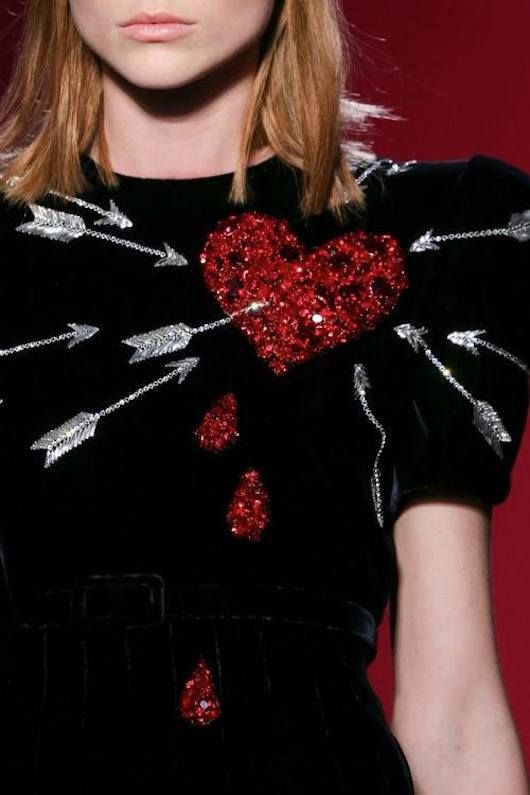

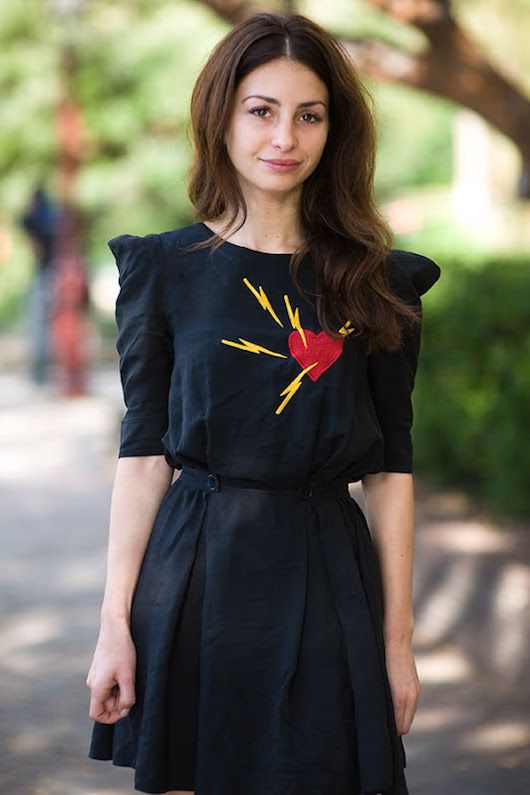
I fear this post will be quite long because there are so many areas to cover when we are discussing knock-offs. First what makes a knock-off? A direct copy or something very close to a direct copy? When does it become "inspired by" instead of knock-off and what if it's all a copy of a copy of a copy? And does it hurt the brand? What about how it's produced?
The first question that comes to mind with knock-offs is what is the creative source? The first image in this post is a dress from the Schiaparelli Haute Couture F/W 2014 collection and the second is of Ginger Rogers in a similar heart top for the 1938 movie Carefree and the final picture is a street fashion picture from 2010 of a Karen Walker dress. Which is the knock-off? The haute couture look which almost completely replicates the 1938 one or the Karen Walker dress which seems to take inspiration from the past while putting its own twist on things? After seeing the Karen Walker dress I actually made my own version using felt. Is my DIY project a knock off?
Ultimately to me defining a knock-off becomes very tricky when you look back and notice earlier versions and how things get re-interpreted by different stores and brands. Can you actually pinpoint the original thought or is that high street knock-off actually copying a copy itself? If you buy a Schiaperlli Haute Couture dress copying a 1930s one are you buying less of a knock-off than someone shopping something cheaper online? Also, what sort of alterations make an item "inspired" by an original design rather than a copy of it? Is changing embellishment to a flat print enough? There are blood drips in the Sciaperlli look you can't see in the 1930s one and it's more gem-encrusted--so is it not a copy since they changed small details? I just find it a very thin line between an online shop selling an identical dress in a cheaper material than the original and a high street store selling a dress inspired by the original with minor alterations.
Of course the inspiration becomes a moot point with many blatant designer knock-offs. Perhaps ultimately though the question of originality doesn't matter. Even is a modern designer dress was inspired by a vintage one, the designer dress is the one being copied today--it is that current design house that stands to be affected by knock-offs. For me it then becomes a question of whether my knock-off purchase actually hurts the designer. For example, I recently wore a dress that replicates a Dolce & Gabbana dress priced at over $4,000. I hesitate to purchase an item when it costs more than $100 and won't spend $4,000 on my wedding dress. So, when I purchase a much cheaper knock-off I'm not hurting Dolce & Gabbana sales--Dolce & Gabbana were never going to make a sale from me. Direct sales to individuals like myself do not affect big brands that have priced themselves out of our market.
Indirectly, a lot of knock-offs can theoretically negatively affect sales since part of the incentive of a higher price is exclusivity. Birkin popularity seems to be decreasing since more reality stars started carrying them and they have became more ubiquitous. Not even Birkin knock-offs, but rather the supposed of accessibility and rise in Birkin visibility on city streets is affecting the brand. The model remains the same for knock-offs though: too many versions of the same dress being available at high street shops and people who can afford the original lose interest. Again, personally my thoughts are this: snobbery shouldn't be reinforced. If people are only interested in a piece because no one else can afford it, then their interest is superficial and I don't see why I should protect it by refusing to buy a knock-off. Many luxury brands are inflating their prices to increase their appeal. I'm not really interested in protecting a brand that intentionally seeks to appeal only to higher income individuals and keep the plebeians out of their clothes. In fact, my views on not wanting to protect brand identity of a number of designers could be an entire other post.
On the opposite side of the knock-off dilemma affecting brands is a theory that the popularity of replicas actually helps sales of a brand--perceived popularity can also drive sales. People interested in having "it" items will buy things they seem everyone else wearing and people who buy replicas do sometimes upgrade to the original. It seems that whatever way you look at it big brands and major designers aren't suffering that much from knock-offs.
Independent brands and artists are a different story. While I'm fairly comfortable purchasing knock-offs of major designers and brands I'll never be able to afford I avoid pieces that knock-off individual designers or artists. Of course, many shops that carry knock-offs of designers will also carry knock-off of individual, independent work. If I recognize an illustration from an artist on Etsy on the sweatshirt in a shop not affiliated with the artist, I won't purchase it. Some will choose not to shop at those stores, but it's rather difficult to find shops that aren't guilty of copying artists' work. I often see shops based in China or Korea as the biggest offenders, but we are quick to forget that even Zara has been caught printing images of bloggers on their tee shirts. They pulled the shirts after public outrage, but the example remains: almost any high street shop you shop at is probably guilty of producing a knock-off. It almost seems as if the only way to avoid knock-offs entirely is to go directly to the source and purchase only vintage, secondhand, or independent designs. Although I admire people with that sort of dedication, it's a step I don't quite feel prepared to make. I just know for myself that I will do everything in my power to support independent designers through posts and purchases--and non purchases!
But aren't knock-offs produced in unsafe working conditions? While I think it is good people seem concerned about how knock-offs are produced, I think it's disingenuous to phrase this problem as if it's a knock-off issue. It's becoming more and more clear that much of our high fashion is produced in terrible, even deadly conditions. Even brands like Nike, Gap, and Calvin Klein produce clothes in Bangladesh where a deadly factory collapse happened in 2013. PVH Corp. (owner of Calvin Klein and Tommy Hillfiger) only signed a safety agreement aimed at stricter regulation of working conditions after the factory collapse. Consider also the suicide protests of factory workers in China producing Apple products a few years ago. People rarely seem to question how their iPhone was made even when they focus on ethically produced clothing. Knock-off and otherwise, many of the products we acquire with little thought are being produced in atrocious conditions.
And while the working conditions are terrible, boycotting factories and pressuring companies to end production in certain countries also negatively affects communities. Boycotting knock-offs or buying only "Made in America" clothing won't improve working conditions elsewhere. Ultimately, we need to ask for more brand transparency and question the origins of all of our purchases. Something you can do is join a site like SumofUs (I'm sure there are others) which has the slogan of "people over profits." The site will notify you about campaigns you can get involved with--some ask merely for a signature while others might request a small donation. Specific to clothing you can join the Clean Clothes Campaign. Sites like these help keep you informed, but ultimately we must use discernment in all our decisions from our purchases to what causes we choose to support.
Anyway, these are my thoughts on knock-offs at the moment--I'm not as educated in all of the issues as I could be and my opinions could change as I learn more and feel convicted. What are your thoughts on buying knock-offs?
Labels: ramblings
posted by Unknown @ 3:00 PM
0 Comments